




It is not just a historical term: it remains a live, regulated part of Scottish rural life, with its own regulator and ongoing policy attention from the Scottish Government.
This article explains what crofting is, where it comes from, and why it still matters now.
What is crofting?
A simple crofting definition is this: crofting is a distinct Scottish system for holding and using small areas of rural land within a wider legal and community framework.
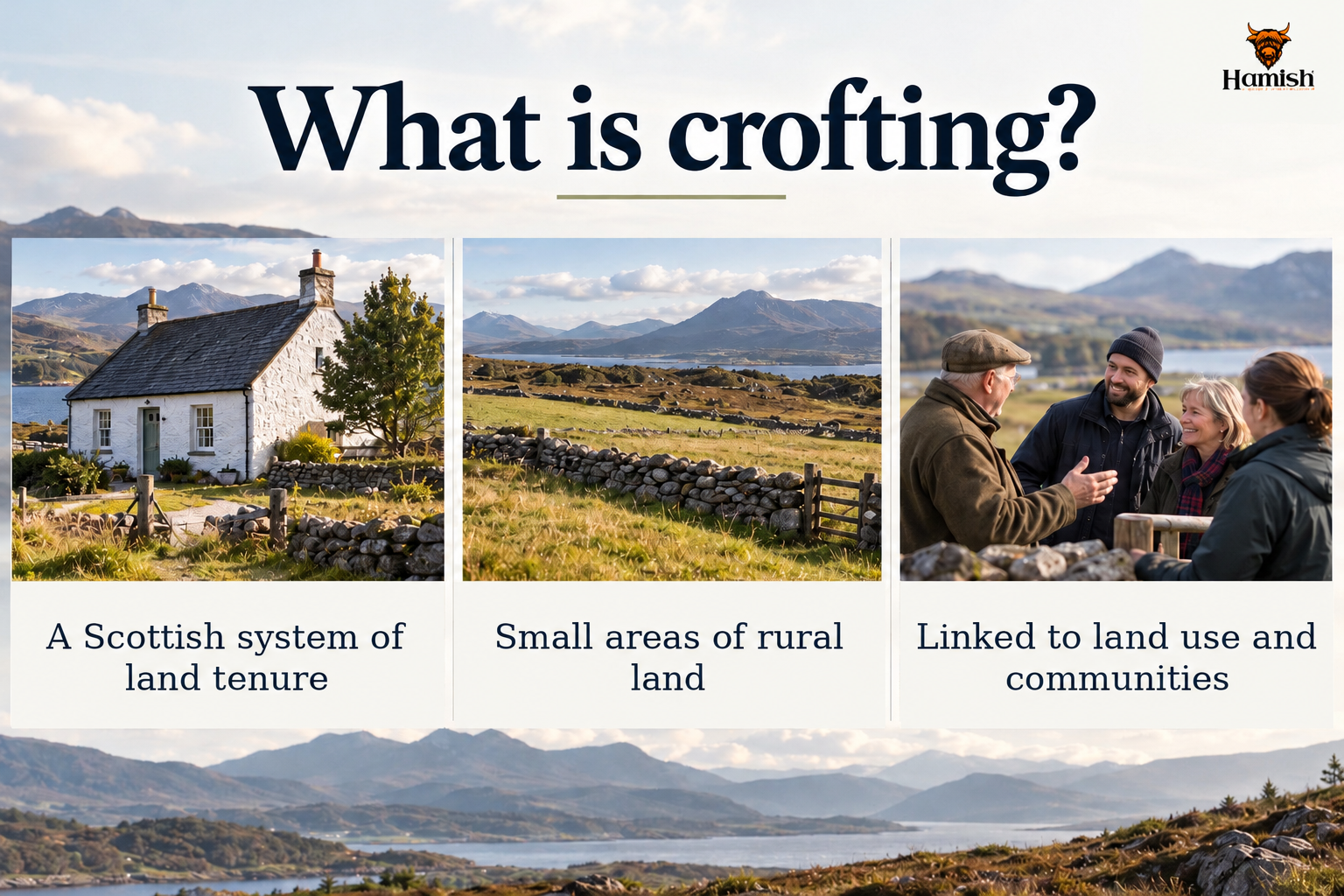
That matters because crofting is not just another word for a small farm. A smallholding, a farm tenancy and a croft may all involve rural land, but crofting is treated separately in Scotland because it sits within its own long-standing legal system. The Scottish Government describes crofting as “a uniquely Scottish system of land tenure” that supports communities and land use across the Highlands and Islands (Scottish Government).
In practical terms, modern crofting in Scotland is about more than one plot of land. It is also about how land, people and local communities are organised. That community aspect is important enough to appear in current government policy material, not just in heritage descriptions.
Where did crofting come from?
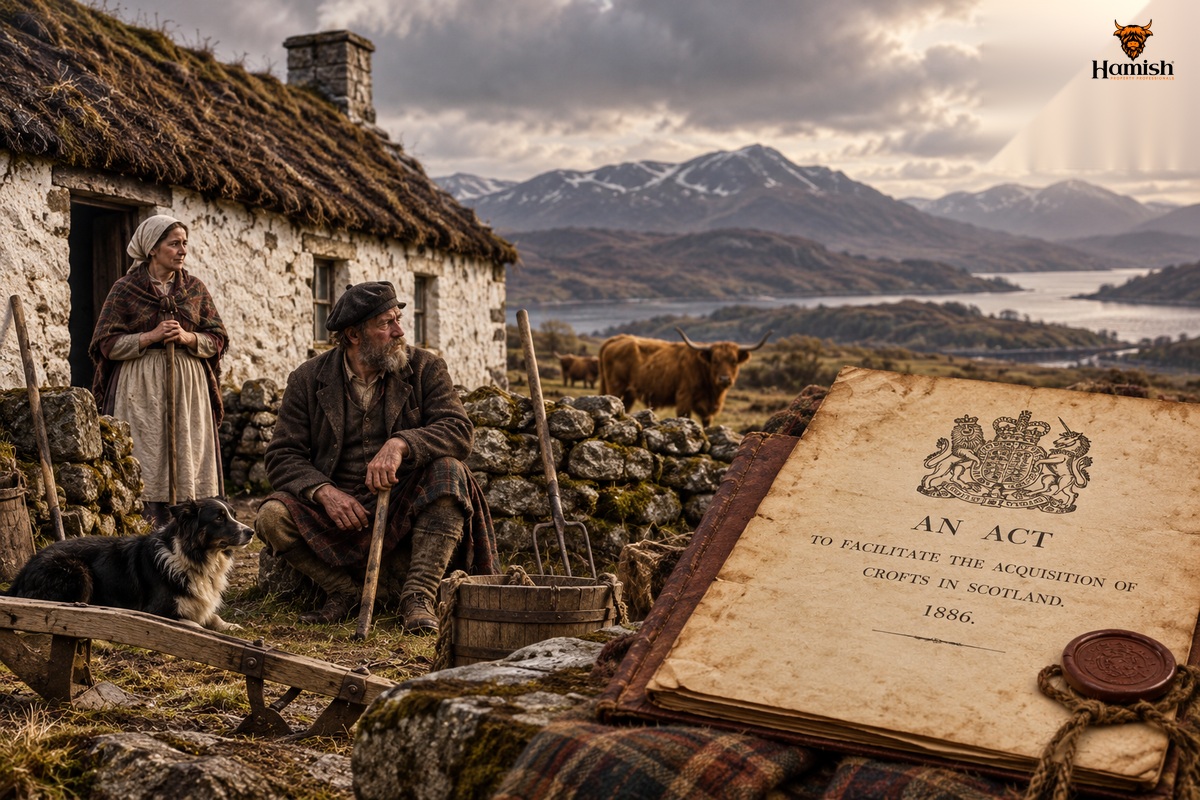
Crofting is treated as a separate system partly because its legal roots run deep. According to the Scottish Government, the first crofting legislation dates back to 1886.
That does not mean crofting is frozen in the past. A better way to think about it is:
- legal roots in 1886
- continued regulation after that
- still under policy review today
This long legal history helps explain why crofting is not simply folded into ordinary farming or generic land law. Its distinct status is institutional as well as cultural.
Does crofting still happen today?
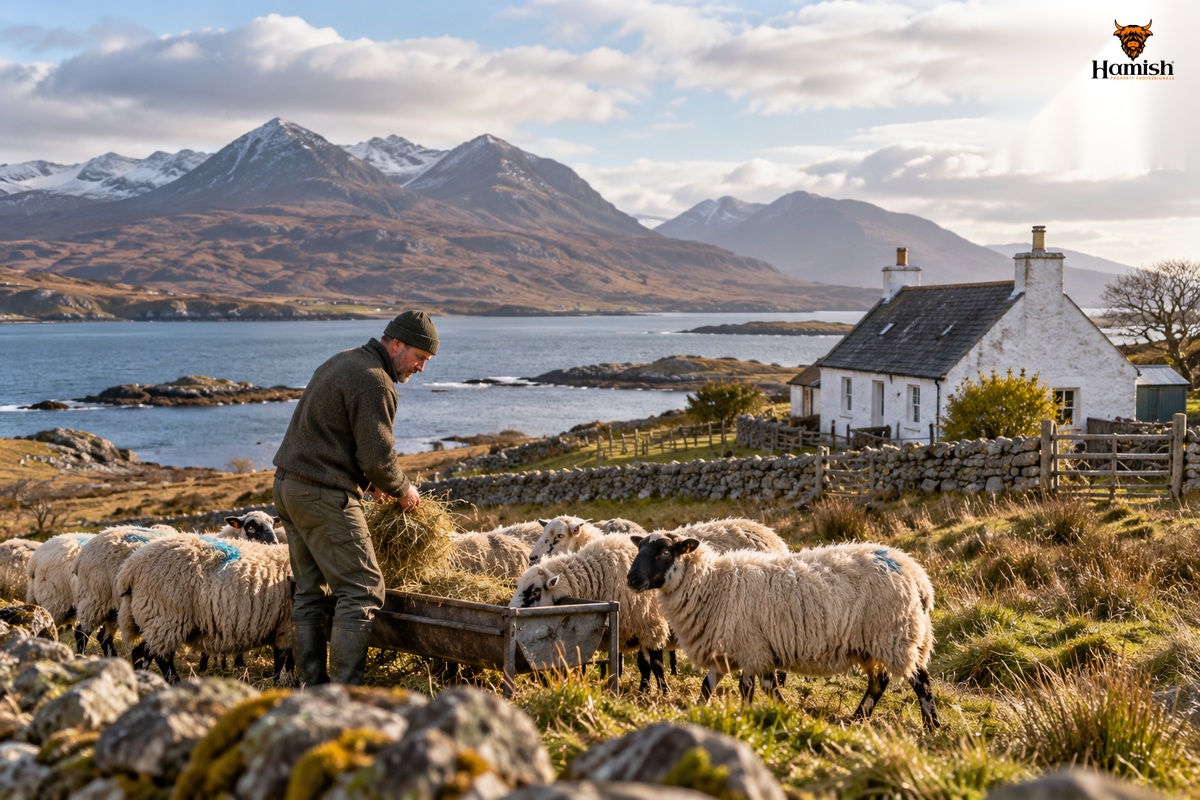
Yes — crofting still happens today in Scotland.
There are several solid reasons we can say that confidently.
First, Scotland has a dedicated regulator: the Crofting Commission. The Commission says it “regulates and promotes the interests of crofting in Scotland to secure the future of crofting.”.
The Crofting Commission’s current regulatory work, registers, applications and annual notices show that crofting remains an active administrative system.
Second, the Commission’s public-facing systems show crofting is operational in practice. Its website includes applications, forms, croft search tools and current information, which are all signs of a live administrative system rather than a museum subject..
Third, the Scottish Government is still actively working on crofting policy. A government consultation on crofting law reform shows that crofting remains an active public-policy issue, not a closed historical chapter. Related impact-assessment material also shows that crofting was still being discussed in legislative terms later on (Scottish Government).
What we cannot say from the supplied evidence is exactly how many crofts or crofters there are today, or whether crofting is growing or shrinking. But the evidence is strong enough to answer the main question: crofting still happens in Scotland, and it is still regulated and policy-relevant.
How is crofting regulated in Scotland?
Crofting is overseen by the Crofting Commission, the dedicated regulator for crofting in Scotland.
At a high level, that means crofting is not just informally recognised. It sits within an administrative and legal framework that people still use. For a general reader, the clearest signs of that are practical ones:
- there is a named public regulator
- there are official forms and applications
- there are croft-search functions
- there are current news and updates
Those are useful real-world indicators of how crofting still exists today. “Still happens” does not only mean that some people still identify as crofters; it also means there is a functioning system around crofting.
One caution is important here. The supplied sources do not give a full operative statutory definition of exactly what counts as a croft or crofter, and they do not provide a full list of legal duties or procedural rules. So it would be wrong to pretend this article can summarise the whole crofting regime or give legal advice on individual cases.
Why does crofting still matter?
Crofting still matters because it is tied to land use and community life in parts of Scotland, especially the Highlands and Islands.
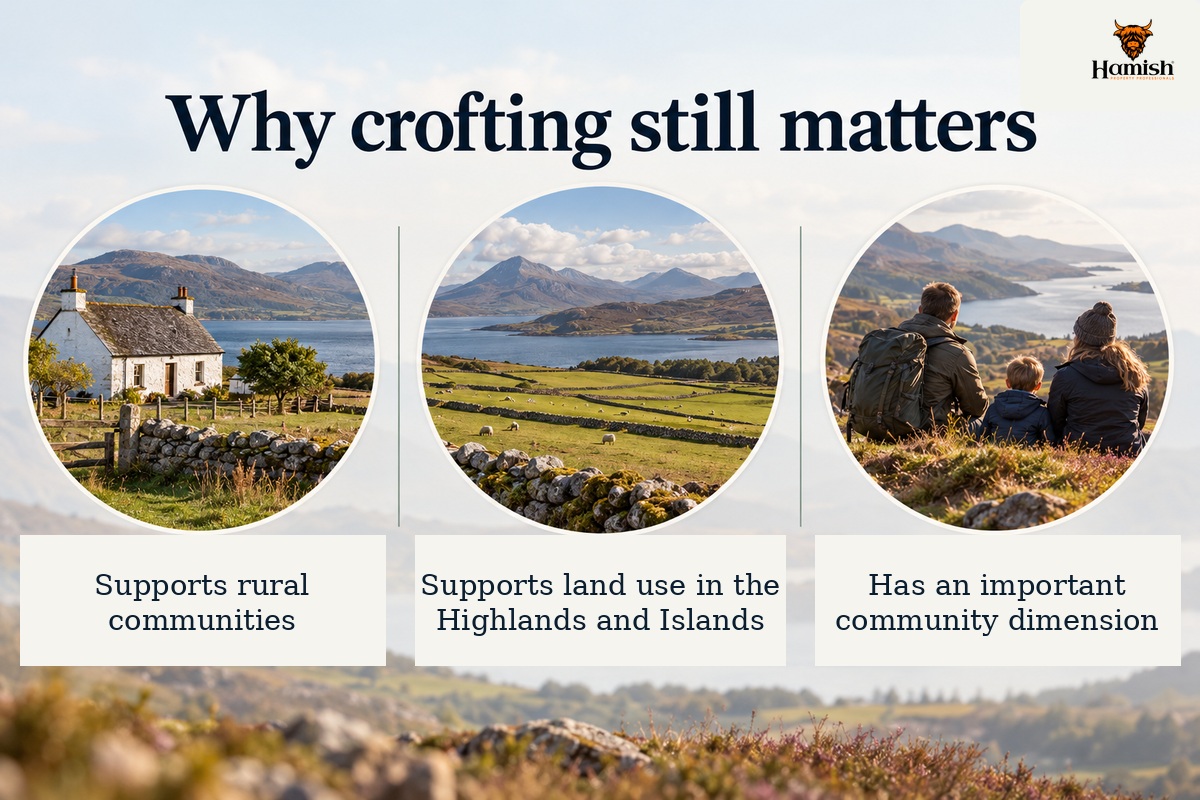
The Scottish Government describes crofting as supporting communities and land use across those areas (Scottish Government). Separate government material also says crofting has “an important community dimension” and that legislation balances the rights of individual crofters with the interests of the communities they are part of (Scottish Government).
In plain English, that means crofting is still relevant because it is not only about one person using one piece of land. It is also about how local rural communities are structured and how land-related rights are handled within them.
That is why modern discussion of crofting often sits in legal and civic territory as much as in agriculture. Its continuing relevance is visible in:
- regulation through a dedicated public body
- administration through forms, searches and applications
- policy reform through consultation and legislative discussion
- community interest as part of how crofting is described in government material
It is best to keep that relevance framed in land-use and community terms. The supplied evidence does not support broader claims about economic scale, environmental impact or demographic outcomes.
What we can say with confidence — and what needs caution
Supported by the supplied evidence
- Crofting is a uniquely Scottish system of land tenure
- Its legal framework has roots going back to 1886 (Scottish Government).
- Crofting still happens today in Scotland.
- It is overseen by a dedicated regulator, the Crofting Commission.
- Crofting has an important community dimension in law and policy.
- Crofting remains a live policy issue, with reform work and consultation activity still taking place (Scottish Government).
Needs caution
- The supplied evidence does not confirm exact current numbers of crofts or crofters.
- It does not provide a full statutory definition of every legal term involved.
- It does not let this article give definitive rules on exactly who can become a crofter.
- It would be unsafe to present consultation proposals or impact-assessment material as already enacted law unless separately confirmed.
- The evidence does not support claims that crofting is expanding, declining, widespread or especially profitable.
That distinction matters. It keeps the answer accurate without pretending to know more than the sources show.
Frequently Asked Questions
Is crofting only found in Scotland?
From the supplied evidence, crofting is described by the Scottish Government as a uniquely Scottish system of land tenure Scottish Government.
Is crofting still regulated today?
Yes. The Crofting Commission is the dedicated regulator and says it regulates and promotes the interests of crofting in Scotland.
Are new crofting laws already in force?
The Crofting and Scottish Land Court Act 2026 has now become law. It introduces changes to crofting processes, including simplified family transfers, changes relating to common grazings and new enforcement powers for the Crofting Commission. However, individual provisions may come into force at different times, so anyone relying on a specific legal requirement should check the latest Scottish Government or Crofting Commission guidance.
Can this article tell me exactly who can become a crofter?
No. The supplied evidence is enough to explain what crofting is and confirm that it still exists, but it does not provide full eligibility rules or a complete procedural guide.
Why Crofting Still Matters in Scotland
Crofting is not just a historical curiosity. It is a living, regulated Scottish system with legal roots going back to 1886, a dedicated regulator in the present day, and continuing attention in government policy. What we can say confidently is that crofting still exists and still matters institutionally and communally in Scotland. What we cannot do from the evidence here is pin down its exact current scale or every legal detail.
If you are considering buying or selling a property in the Highlands, Hamish Homes can also help with local property advice and support throughout the buying or selling process.
In This Article


