

EPC ratings are becoming a more important part of property discussions in the Highlands. For some homes, particularly rural and off-gas-grid properties, heating choices, energy costs and the practicality of future improvements can have a direct impact on everyday comfort and ownership costs. This does not mean that the Highlands have separate EPC rules, but local property conditions can make the information on an EPC more useful when buying, selling, letting or planning upgrades.
An EPC is an Energy Performance Certificate. In plain English, it is a document that gives a property an energy efficiency rating and sets out recommended improvements.

The rating is designed to give a quick, standardised indication of how energy-efficient a home is likely to be. It is useful shorthand, but it is not a perfect forecast of your future bills or how warm a property will feel in real life. Actual energy costs and comfort still depend on how the home is used, how well systems are maintained and what energy prices are doing.
Broadly, an EPC assessment looks at the property’s construction and energy-related features, such as:
When you read an EPC, the key parts are usually:
That is why EPC ratings matter in conversations about property readiness: they turn a lot of technical detail into one visible reference point.
The short answer is that EPCs now sit at the crossroads of running costs, energy efficiency and transaction planning.

They are getting more attention for a few practical reasons:
That visibility matters. A lot of property details require explanation, but an EPC rating is simple to quote and easy to notice in marketing materials or paperwork. That alone can make it feel more important than it once did.
The Highlands do not have a separate EPC system, but the local housing context can make energy performance a more practical concern for some property owners. Many homes in the area are outside the mains gas network, meaning owners may need to consider alternative heating systems, fuel costs and maintenance requirements.

Some Highland properties are also rural, older or traditionally constructed. These homes may need more careful planning before insulation, glazing or heating upgrades are carried out. A recommendation shown on an EPC may be a useful starting point, but it should always be checked against the building’s construction, condition and location.
EPCs are also receiving attention because Scotland is reforming its EPC system. New-style EPC certificates, an updated rating system and related Property Reports were originally due to take effect from 31 October 2026, but in March 2026 the Scottish Government confirmed this will be delayed until at least late 2027, with no new date yet confirmed. The current (2008-style) EPC system remains in place until then.Property owners should check the latest Scottish Government guidance before marketing a property, as the rules and transition arrangements may affect which certificate is required
EPCs matter because they are easy for everyone to refer to, even if nobody treats them as the whole story.

For sellers, a weaker rating may prompt questions such as:
That does not automatically mean the property will sell for less. It does mean the conversation may become more detailed, particularly if the home already presents as older, harder to heat or in need of modernisation.
For buyers, the EPC is best used as one input alongside:
A modest EPC rating does not necessarily make a property a bad purchase. Equally, a better rating does not mean every aspect of the home is efficient or problem-free. It is a clue, not a verdict.
For landlords, EPCs are important for both property marketing and possible future compliance requirements. The Scottish Government has proposed minimum energy-efficiency standards for privately rented homes, but these proposals should not be treated as confirmed law until the final regulations are published. Landlords should therefore check the latest official Scottish Government guidance before starting a new tenancy, re-letting a property or planning improvement work.
Checklist Before Marketing or Buying a Home
If your property has a poor EPC, the best response is not to chase every recommendation blindly. The goal is to improve the home sensibly, based on what suits the building.

These are often the easiest place to begin:
These measures may not transform every property, but they can be relatively straightforward and may support comfort as well as efficiency.
If the property is suitable, the building fabric often has a big influence on performance:
This is also where caution matters most. Older or traditional buildings do not always suit standard retrofit measures. Some recommendations can create unintended problems if they are not designed properly for the way the building is constructed.
Heating efficiency is often a major lever in EPC performance, but it is also where costs and complexity can rise:
In some homes, this will be a sensible step. In others, it may be expensive, disruptive or difficult to justify before a sale.
The key point is to prioritise suitability and likely impact, not just the certificate itself. A recommendation may improve an EPC on paper, but still be poor value or inappropriate for the building.
Before committing to major works, compare the EPC suggestions against:
Sometimes yes. Sometimes no.
The decision usually comes down to whether the work is proportionate to your timescale and the type of property.
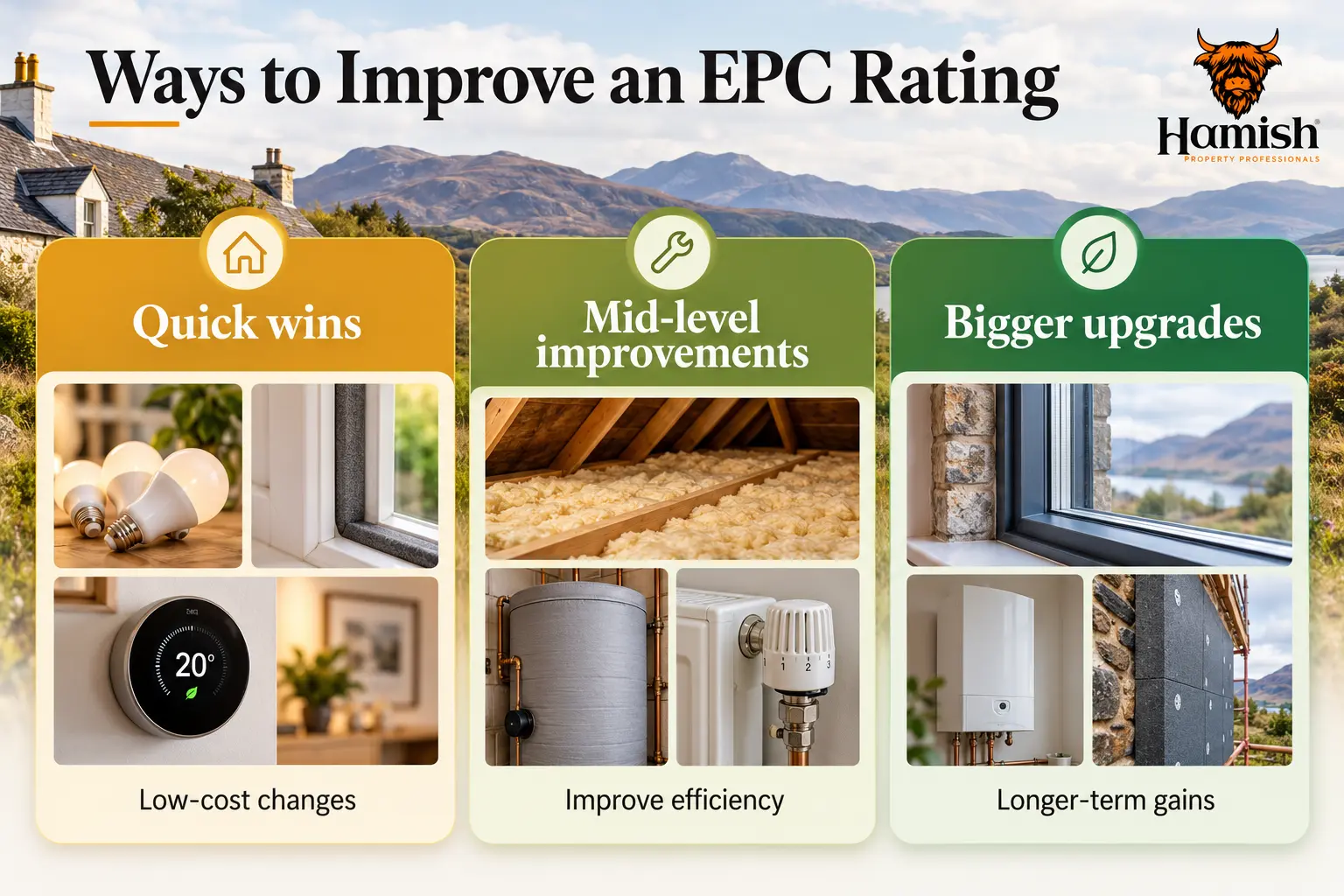
Think in three paths:
This tends to make sense when:
Typical examples might include simple insulation top-ups, basic draught reduction or heating-control improvements where appropriate.
This can be sensible when:
This path can work well if the EPC is not ideal but the home has other strong selling points.
Holding off may be the better choice when:
In those cases, rushed spending can be worse than transparent selling. A buyer may value clear information more than a hurried change that does not really suit the building.
If your current rating is disappointing, a simple five-step plan is usually the best next move:
The bigger point is this: a poor EPC is not just a rating problem. It is a prompt to understand the property better and decide what, if anything, is worth doing next.
An assessor visits the property and records key features linked to energy performance, such as insulation, heating, windows and lighting. That information is used to produce the certificate, including a current rating, a potential rating and recommendations. It is designed to be a standardised snapshot rather than a bespoke whole-house retrofit plan.
A poor EPC does not automatically make a property unsellable or unliveable. But it can lead to more questions about energy efficiency, heating and potential improvement costs, and extra caution if you are preparing to let the property. If a transaction is planned, it is sensible to understand the rating rather than leave it unexplained.
Not necessarily. The outcome depends on the property, the type of work, buyer expectations, cost and whether the improvements are genuinely suitable. Some measures may help marketing or comfort. Others may be too expensive, too niche or simply not valued enough by the next buyer to justify doing before sale.
No. Older or more traditional properties often need more careful judgement. Some standard recommendations may be sensible; others may be impractical or unsuitable for the building. The right approach is to treat the EPC as a starting point, then sense-check each measure against the construction, condition and use of the home.
EPC ratings are becoming a bigger part of property decisions because they provide a simple way to discuss energy efficiency, heating and possible improvements. In the Highlands, this may be especially relevant for rural, off-gas-grid, older or traditionally built homes, where upgrade decisions can require more planning.

A poor EPC is not automatically a reason to reject or heavily discount a property. It is a starting point for asking the right questions, checking suitable improvements and understanding the latest Scottish requirements before selling or letting.
If you are considering selling a Highland property, speaking to a local property professional such as Hamish Homes can also help you understand how EPC considerations may affect your plans.